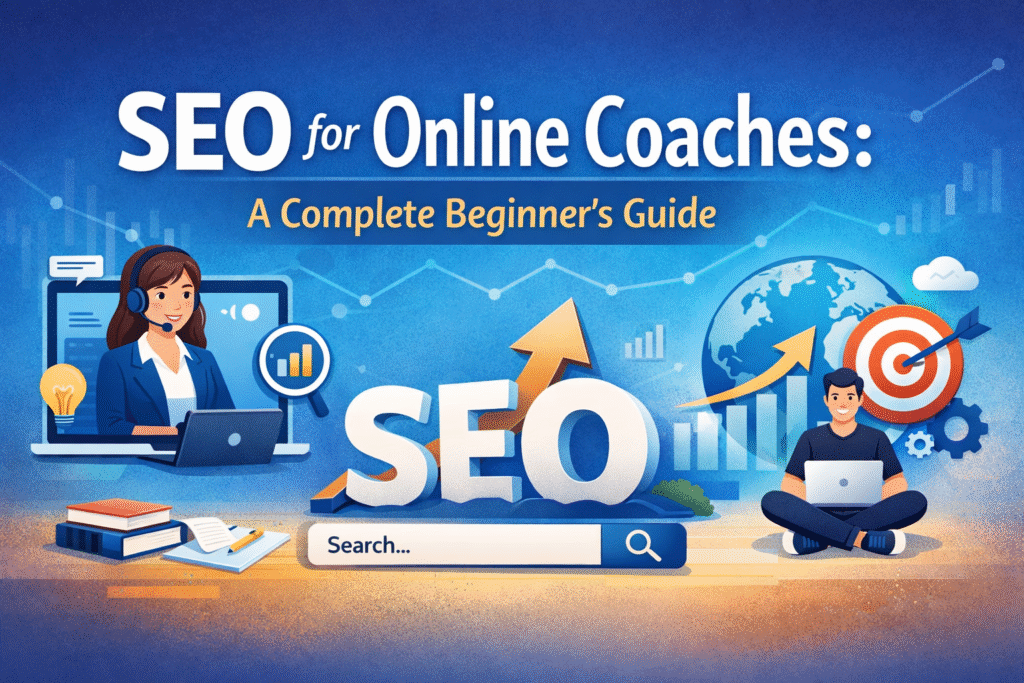
The online coaching industry has grown rapidly over the last few years. From life coaches and fitness trainers to business, mindset, and career coaches, competition is higher than ever. Social media can bring visibility, but it’s inconsistent and heavily dependent on algorithms. This is where SEO for online coaches becomes a game-changer.
Search Engine Optimization (SEO) helps online coaches attract consistent, high-quality leads from Google without relying entirely on paid ads or social platforms. This guide breaks down SEO in simple terms and explains exactly how online coaches can use it to grow their coaching business sustainably.
What Is SEO and Why It Matters for Online Coaches
SEO is the process of optimizing your website so it ranks higher on search engines like Google when potential clients search for coaching-related services or questions.
For online coaches, SEO matters because:
-
People searching on Google already have intent
-
SEO brings long-term, passive traffic
-
You attract clients who are actively looking for help
-
You reduce dependency on social media algorithms
Unlike ads, SEO doesn’t stop working when you stop paying—it compounds over time.
How Online Coaches Benefit from SEO
1. Consistent Lead Generation
When your website ranks for relevant keywords, potential clients can find you 24/7. A single blog post can generate leads for years.
2. High-Quality Traffic
SEO targets users who are already searching for solutions, making them more likely to convert into paying clients.
3. Builds Authority and Trust
Ranking on Google positions you as an expert in your coaching niche, even before a discovery call happens.
4. Scalable Growth
SEO works whether you’re serving local clients or coaching globally through Zoom.
Understanding Search Intent for Coaching Keywords
Before optimizing your website, it’s important to understand search intent—the reason behind a search.
Online coaching keywords usually fall into three categories:
-
Informational: “how to find a life coach online”
-
Commercial: “best online fitness coach”
-
Transactional: “hire business coach online”
A strong SEO strategy balances all three, guiding users from education to conversion.
Keyword Research for Online Coaches (Beginner-Friendly)
Keyword research is the foundation of SEO. It helps you understand what your potential clients are searching for.
How to Find Keywords
-
Use Google autocomplete suggestions
-
Check “People Also Ask” questions
-
Use SEO tools like Ahrefs, SEMrush, or Ubersuggest
-
Analyze competitor coaching websites
Examples of Coaching Keywords
-
online life coach for anxiety
-
business coach for entrepreneurs
-
fitness coaching programs online
-
mindset coach for professionals
Target long-tail keywords (more specific phrases) because they’re easier to rank for and attract more qualified leads.
Website Pages Every Online Coach Needs for SEO
A well-structured coaching website improves both rankings and user experience.
Must-Have Pages:
-
Home page (clear value proposition)
-
About page (builds trust and credibility)
-
Services or Programs page
-
Blog or Resources section
-
Contact / Book a Call page
Each page should focus on a primary keyword and answer user questions clearly.
On-Page SEO Basics for Online Coaches
On-page SEO refers to optimizing individual pages on your website.
Key Elements to Optimize:
-
Title tags (include your main keyword)
-
Meta descriptions (encourage clicks)
-
Headings (H1, H2, H3) for structure
-
Internal linking between related pages
-
Image alt text for accessibility and SEO
Clear, helpful content always performs better than keyword stuffing.
Blogging Strategy for Online Coaches
Blogging is one of the most effective SEO tools for online coaches.
What Should Online Coaches Blog About?
-
Client pain points
-
Common coaching questions
-
Case studies and success stories
-
Step-by-step guides
-
Myths and misconceptions in your niche
For example, a fitness coach could write about sustainable weight loss habits, while a business coach could cover pricing strategies or mindset blocks.
A consistent blog builds topical authority and helps Google understand your expertise.
Technical SEO (Simplified for Beginners)
You don’t need to be technical, but a few basics are essential.
Technical SEO Essentials:
-
Fast website loading speed
-
Mobile-friendly design
-
Secure website (HTTPS)
-
Clean URL structure
-
Proper indexing by Google
Most modern platforms like WordPress, Webflow, or Wix handle many of these automatically when set up correctly.
Link Building for Online Coaches
Backlinks (links from other websites to yours) signal trust and authority to Google.
Beginner-Friendly Link Building Ideas:
-
Guest posting on coaching or wellness blogs
-
Podcast appearances
-
Collaborations with other coaches
-
Listing your business in relevant directories
-
Publishing shareable, high-value content
Quality matters more than quantity—avoid spammy links.
Local vs Global SEO for Online Coaches
Even if you coach online, local SEO can still help.
-
Local SEO helps you rank in a specific city or region
-
Global SEO helps you attract clients worldwide
Optimizing for both allows you to capture nearby leads while expanding globally. This strategy is commonly used across industries, from coaching to professional niches like SEO for family lawyers.
Measuring SEO Success for Online Coaches
SEO results don’t happen overnight, but progress is measurable.
Key Metrics to Track:
-
Organic website traffic
-
Keyword rankings
-
Leads from organic search
-
Conversion rate
-
Bounce rate and time on page
Tools like Google Analytics and Google Search Console are free and beginner-friendly.
Should Online Coaches Hire an SEO Agency?
Many online coaches start with DIY SEO but later partner with experts to scale faster.
A reliable agency can:
-
Build a clear SEO roadmap
-
Create optimized content
-
Improve technical performance
-
Deliver measurable ROI
Many coaching brands work with the best seo company in India offering best digital marketing services in India to get professional support while keeping costs efficient.
Final Thoughts
SEO for online coaches is not about gaming Google—it’s about creating helpful, relevant content that solves real problems for your audience. When done right, SEO becomes a powerful, long-term client acquisition channel that works alongside social media, email marketing, and referrals.
Whether you’re just starting your coaching journey or looking to scale, investing time (or expertise) into SEO can give you a sustainable edge in a competitive market.
FAQs: SEO for Online Coaches
1. How long does SEO take to show results for online coaches?
Typically 3–6 months, depending on competition, content quality, and consistency.
2. Is SEO better than social media for coaches?
SEO provides long-term traffic, while social media offers short-term visibility. Both work best together.
3. Do online coaches need a blog for SEO?
Yes, blogging helps rank for informational keywords and builds authority over time.
4. Can I do SEO myself as a beginner?
Yes, basic SEO can be learned, but advanced strategies often require expert help.
5. What keywords should online coaches target first?
Start with long-tail, problem-based keywords related to your niche.
6. Is local SEO useful for online coaching businesses?
Yes, especially if you want clients from a specific city or region.
7. How many blog posts do I need for SEO?
Quality matters more than quantity, but consistency is key—2–4 per month is a good start.
8. Does website design affect SEO?
Yes, site speed, mobile responsiveness, and user experience directly impact rankings.
9. Are backlinks important for online coaches?
Yes, they improve authority and help Google trust your website.
10. When should I hire an SEO agency?
When you want faster growth, better rankings, and predictable lead generation.