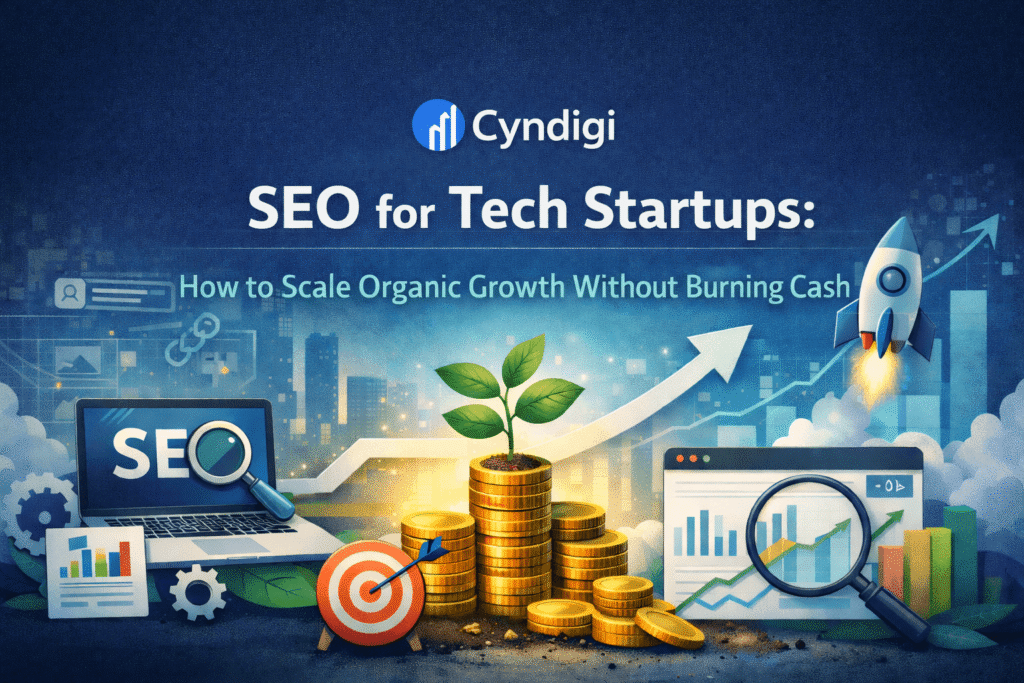
For tech startups, growth is everything—but so is runway. With limited budgets, rising ad costs, and intense competition, many founders struggle to find a scalable, cost-effective marketing channel that delivers long-term results. This is where SEO for tech startups becomes a game-changer.
Unlike paid ads that stop delivering the moment you pause spending, SEO builds a compounding growth engine. When done right, it helps startups acquire users, leads, and visibility without burning cash every month.
In this blog, Cyndigi breaks down how tech startups can scale organic growth sustainably using SEO, what strategies actually work, and how to avoid common pitfalls.
Why SEO Is Critical for Tech Startups
Tech startups operate in crowded markets—SaaS, AI, fintech, logistics, healthtech, and beyond. Competing with well-funded enterprises through ads alone is rarely sustainable.
SEO helps startups:
-
Reduce customer acquisition costs (CAC)
-
Build trust and authority early
-
Capture high-intent users actively searching for solutions
-
Create predictable, long-term traffic growth
-
Compete with bigger brands using smart strategy, not bigger budgets
For startups targeting global or Indian markets, leveraging professional SEO services in India can significantly improve ROI due to strategic expertise and cost efficiency.
The Biggest SEO Mistake Tech Startups Make
Many startups delay SEO until “later,” focusing only on paid growth. By the time they invest in SEO, competitors have already captured top rankings.
Another common mistake is chasing vanity keywords instead of focusing on:
-
Search intent
-
Product-led keywords
-
Problem-solution queries
-
Bottom-of-funnel content
SEO success for startups isn’t about ranking for everything—it’s about ranking for the right things.
Step 1: Build an SEO Foundation That Scales
Before publishing content or building links, startups must get the basics right.
Technical SEO Essentials
-
Fast-loading website (Core Web Vitals optimized)
-
Mobile-first design
-
Clean site architecture
-
Proper indexing and crawlability
-
Secure HTTPS setup
These fundamentals ensure search engines can properly understand and rank your website.
At Cyndigi, we often see startups with great products but poor technical SEO—fixing this alone can unlock rapid ranking improvements.
Step 2: Target High-Intent Keywords (Not Expensive Ones)
Early-stage startups shouldn’t compete for ultra-competitive keywords immediately. Instead, focus on long-tail, intent-driven keywords.
Examples:
-
“Best workflow automation tool for startups”
-
“Affordable SaaS billing software”
-
“Inventory management software for logistics startups”
This approach allows faster wins, lower competition, and higher conversions.
Startups in niche sectors—such as logistics or supply chain—can benefit massively from specialized SEO strategies. Working with an SEO agency for logistics ensures keyword research aligns with industry-specific buyer intent.
Step 3: Create Content That Ranks and Converts
Content is the backbone of SEO for tech startups—but only if it’s strategic.
Content That Works for Startups:
-
Use-case pages
-
Comparison blogs
-
“How-to” guides
-
Product-led content
-
Industry-specific solutions
Instead of publishing generic blogs, startups should answer real customer questions—including those that help them rank in featured snippets.
How to Rank in Featured Snippets (Startup-Friendly Strategy)
Featured snippets are powerful—they sit above organic results and drive massive visibility.
To increase your chances:
-
Answer questions in 40–60 words
-
Use clear headings (H2/H3)
-
Add bullet points or numbered lists
-
Include FAQ sections
-
Target “how,” “what,” and “why” queries
For example:
“How to rank in featured snippets for SaaS startups”
Startups that win featured snippets often outperform bigger brands with far less spend.
Step 4: Leverage Local SEO (Even for Tech Companies)
Many startups assume local SEO doesn’t apply to them—but that’s a mistake.
The benefits of local SEO include:
-
Higher visibility in local searches
-
Better trust and credibility
-
Improved conversion rates
-
Stronger presence for sales teams and partnerships
Even B2B tech startups can benefit by optimizing:
-
Google Business Profile
-
Local landing pages
-
Industry-specific local keywords
This is especially important for startups offering SEO services in India or targeting regional markets.
Step 5: Build Authority Without Risky Link Schemes
Backlinks still matter—but quality beats quantity.
Startups should focus on:
-
Guest posting on relevant industry sites
-
Digital PR and thought leadership
-
Partner mentions
-
Product reviews and comparisons
-
Founder-led content and insights
Avoid cheap link-building tactics. Google penalties can derail growth entirely—something startups can’t afford.
Step 6: Use SEO to Reduce Paid Marketing Dependency
One of the biggest advantages of SEO is cost efficiency over time.
Paid ads:
-
Stop the moment you stop paying
-
Become more expensive as competition grows
SEO:
-
Compounds month over month
-
Delivers consistent traffic
-
Lowers CAC long-term
Many of Cyndigi’s startup clients begin with paid campaigns but gradually shift focus as organic traffic becomes their top acquisition channel.
Step 7: Track What Matters (Not Just Rankings)
SEO success isn’t just about rankings—it’s about outcomes.
Startups should track:
-
Organic traffic growth
-
Conversion rates
-
Lead quality
-
Cost per acquisition (CPA)
-
Assisted conversions
Data-driven SEO ensures growth without guesswork.
Why Tech Startups Choose Cyndigi
At Cyndigi, we specialize in scalable SEO strategies tailored for tech startups—from early-stage founders to fast-growing SaaS and logistics companies.
Our approach combines:
-
Technical SEO expertise
-
Product-led content strategy
-
Industry-specific keyword research
-
Ethical, white-hat link building
-
Transparent reporting and measurable ROI
Whether you’re launching, scaling, or expanding globally, our SEO strategies are built to grow with you—without burning cash.
Final Thoughts
SEO for tech startups isn’t about shortcuts—it’s about smart prioritization, intent-driven content, and long-term thinking.
When done correctly, SEO becomes one of the most powerful growth engines a startup can build—delivering sustainable traffic, trust, and revenue at a fraction of the cost of paid channels.
If you’re serious about scaling organic growth the right way, SEO isn’t optional—it’s essential.
Frequently Asked Questions (FAQs)
1. Is SEO worth it for early-stage tech startups?
Yes. SEO builds long-term visibility and reduces dependency on paid ads.
2. How long does SEO take to show results for startups?
Typically 3–6 months, depending on competition and execution.
3. What type of SEO content works best for tech startups?
Product-led blogs, comparison pages, and problem-solving guides.
4. Can startups rank without a big marketing budget?
Absolutely. Strategic SEO focuses on intent, not spend.
5. How to rank in featured snippets as a startup?
Use concise answers, structured content, and FAQ-based formatting.
6. Are SEO services in India effective for global startups?
Yes. India-based SEO teams offer high expertise with cost efficiency.
7. What are the benefits of local SEO for tech startups?
Better visibility, trust, and higher conversion rates in target regions.
8. Should SaaS and logistics startups use different SEO strategies?
Yes. Industry-specific SEO delivers higher relevance and conversions.
9. Why hire a specialized SEO agency for logistics or tech startups?
Niche expertise ensures better keyword targeting and faster results.
10. How does SEO help reduce customer acquisition cost (CAC)?
Organic traffic compounds over time, lowering long-term acquisition costs.