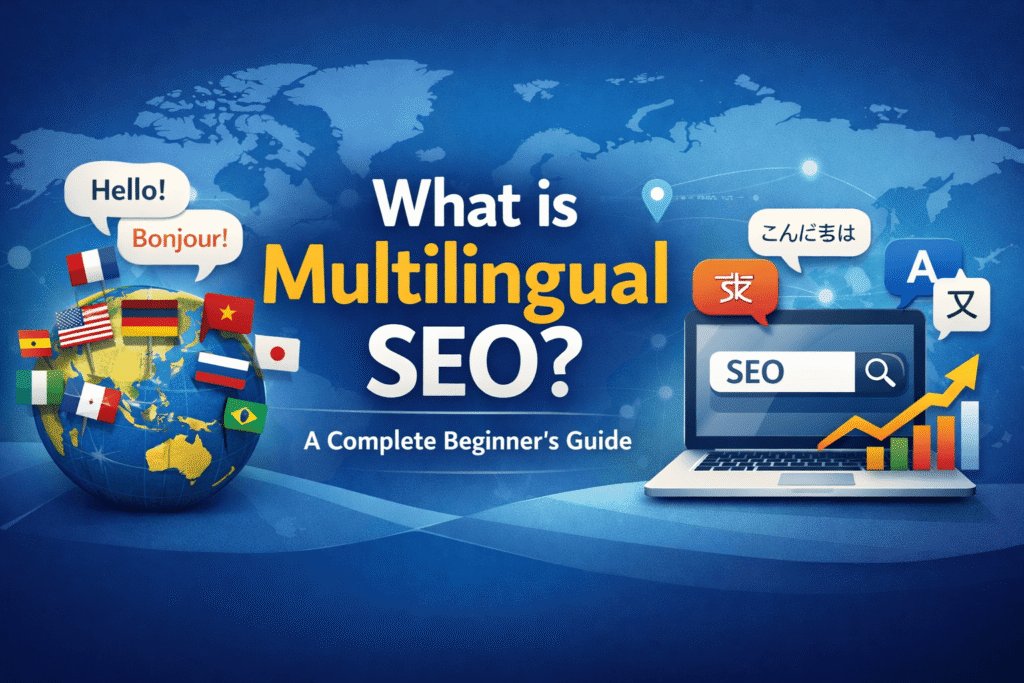
In today’s global digital landscape, businesses are no longer limited by geography. A website can reach audiences across countries, languages, and cultures. However, reaching international audiences requires more than simply translating content—it requires a strategic approach known as Multilingual SEO.
For brands that want to expand globally, multilingual SEO plays a crucial role in improving visibility in search engines for different languages and regions. This beginner’s guide explains what multilingual SEO is, why it matters, and how businesses can implement it effectively to grow their online presence.
Understanding Multilingual SEO
Multilingual SEO is the process of optimizing a website so that it can rank in search engines for users who search in different languages. It involves creating and optimizing content in multiple languages while ensuring search engines understand which language version of the website should appear for specific audiences.
Unlike simple translation, multilingual SEO focuses on adapting content, keywords, and website structure to match how people search in different languages.
For example, a user searching in English may use a completely different phrase than someone searching in Spanish or French, even when looking for the same product or service. Multilingual SEO ensures that each version of the website is optimized for the specific language and audience.
Why Multilingual SEO is Important
The internet has become increasingly global, and users prefer browsing in their native language. Studies show that most online users are more likely to purchase products or services from websites that provide content in their preferred language.
Implementing multilingual SEO offers several benefits:
1. Reach a Global Audience
By optimizing content for different languages, businesses can reach potential customers from multiple countries and regions.
2. Improve Search Engine Visibility
Search engines display results based on language preferences and location. Multilingual SEO helps websites appear in the right search results for international users.
3. Increase Website Traffic
More language options mean more opportunities to attract organic traffic from global markets.
4. Build Trust With International Users
When visitors see content in their own language, they feel more comfortable and confident interacting with the brand.
Multilingual SEO vs International SEO
Many people confuse multilingual SEO with international SEO. Although they are related, they serve different purposes.
Multilingual SEO focuses on optimizing content for multiple languages.
International SEO focuses on targeting different countries or regions, even if the language remains the same.
For example, a business may target both the United States and the United Kingdom using English. In this case, international SEO focuses on regional differences, while multilingual SEO focuses on language variations.
Key Components of Multilingual SEO
Successfully implementing multilingual SEO requires attention to several important factors.
Keyword Research in Different Languages
Keyword research is one of the most critical aspects of multilingual SEO. Simply translating keywords from one language to another is not enough.
Users in different countries may search using completely different terms. Therefore, businesses must conduct localized keyword research to identify phrases commonly used by native speakers.
High-Quality Translation and Localization
Accurate translation ensures that content maintains its meaning across languages. However, localization goes a step further by adapting content to cultural and regional differences.
Localization may include changes in:
-
Currency
-
Units of measurement
-
Cultural references
-
Tone and writing style
This ensures that content resonates with local audiences.
Proper Website Structure
The structure of a multilingual website plays a major role in SEO performance. Businesses usually choose one of the following options:
Subdirectories
Example:
website.com/es/
website.com/fr/
Subdomains
Example:
es.website.com
fr.website.com
Country-specific domains
Example:
website.es
website.fr
Each structure has advantages, but subdirectories are often recommended because they are easier to manage and maintain SEO authority.
Hreflang Tags
Hreflang tags are HTML attributes that help search engines understand which language version of a page should appear for specific users.
For example, if a website has both English and Spanish versions, hreflang tags signal to search engines which version should be displayed to users searching in each language.
This helps avoid duplicate content issues and ensures the correct page appears in search results.
Optimized Metadata
Each language version of a webpage should have unique metadata, including:
-
Title tags
-
Meta descriptions
-
Image alt text
-
URLs
Optimizing these elements helps search engines understand the language and context of each page.
Best Practices for Multilingual SEO
Businesses that want to succeed with multilingual SEO should follow several best practices.
Focus on User Experience
User experience should always be the top priority. Language selection should be simple and easy for visitors to use.
A visible language switcher helps users navigate the website effortlessly.
Avoid Automatic Translation
Machine translations often lack accuracy and may create awkward or confusing content. Human editing and localization are essential to ensure high-quality content.
Maintain Consistent Content Across Languages
While content may be adapted for cultural relevance, the overall message and brand voice should remain consistent across languages.
Optimize Images and Multimedia
Images, videos, and other multimedia elements should also be localized when necessary. This ensures that visual content aligns with the language and culture of the target audience.
Monitor Performance and Analytics
Tracking the performance of each language version is important for identifying opportunities and improving SEO strategies.
Analytics tools help measure:
-
Organic traffic by language
-
User engagement
-
Conversion rates
-
Keyword rankings
Common Multilingual SEO Mistakes
Many businesses struggle with multilingual SEO because of common mistakes.
Direct Keyword Translation
Translating keywords without research can lead to poor rankings and irrelevant traffic.
Duplicate Content Issues
Publishing the same content across multiple language pages without proper tags may confuse search engines.
Ignoring Cultural Differences
Content that works in one region may not resonate with another audience.
Poor Website Navigation
If users cannot easily switch between languages, they may leave the website quickly.
Avoiding these mistakes helps improve both search visibility and user experience.
How Multilingual SEO Supports Business Growth
For businesses planning global expansion, multilingual SEO can significantly increase online reach and conversions.
It allows brands to connect with audiences across different regions while maintaining strong search engine visibility. Companies that invest in multilingual optimization often experience improved engagement, higher traffic, and better conversion rates.
Working with an experienced best seo company in India can help businesses implement advanced strategies that align with global search trends.
In addition, companies offering specialized services such as ecommerce seo services can help online stores reach customers in international markets more effectively.
Modern optimization strategies are also evolving with technology, and partnering with an experienced AI SEO Company can help businesses leverage data-driven insights and automation to scale their multilingual campaigns.
Ultimately, multilingual optimization allows brands to reach new markets and deliver better results through effective SEO for business owners who want sustainable long-term growth.
The Future of Multilingual SEO
As global internet usage continues to grow, multilingual SEO will become even more important for businesses.
Search engines are increasingly prioritizing user intent, localization, and language relevance. Advances in artificial intelligence and machine learning are also improving how search engines understand multilingual content.
Businesses that adopt multilingual SEO strategies early will have a strong competitive advantage in reaching international audiences.
Frequently Asked Questions (FAQs)
1. What is multilingual SEO?
Multilingual SEO is the process of optimizing website content for multiple languages so that it can rank in search engines for users searching in different languages.
2. Why is multilingual SEO important for businesses?
It helps businesses reach international audiences, improve search engine visibility, and increase website traffic from global markets.
3. How is multilingual SEO different from international SEO?
Multilingual SEO focuses on different languages, while international SEO focuses on targeting different countries or regions.
4. What are hreflang tags?
Hreflang tags are HTML attributes that tell search engines which language version of a webpage should be shown to users in different locations.
5. Can I just translate my website for multilingual SEO?
No. Simply translating content is not enough. Proper keyword research and localization are necessary to optimize content for search engines.
6. How many languages should a website support?
It depends on the target audience and business goals. Companies usually start with the languages spoken in their primary markets.
7. Does multilingual SEO improve conversions?
Yes. Users are more likely to trust and purchase from websites that provide content in their native language.
8. What tools help with multilingual SEO?
Popular tools include keyword research platforms, translation tools, and analytics software that track performance across languages.
9. What is the best website structure for multilingual SEO?
Subdirectories are commonly recommended because they are easier to manage and help maintain domain authority.
10. How long does it take to see results from multilingual SEO?
SEO results typically take several months, depending on competition, keyword difficulty, and the quality of optimization efforts.